Basic VCA (B-VCA) training

Basic VCA (B-VCA) training

About this course

VCA (Safety, Health and Environment Checklist for Contractors) is the safety standard many clients and main contractors require before anyone starts work on site. Companies with VCA certification must make sure their operational employees are trained in safe working, and the Basic VCA diploma is the qualification required for that group.

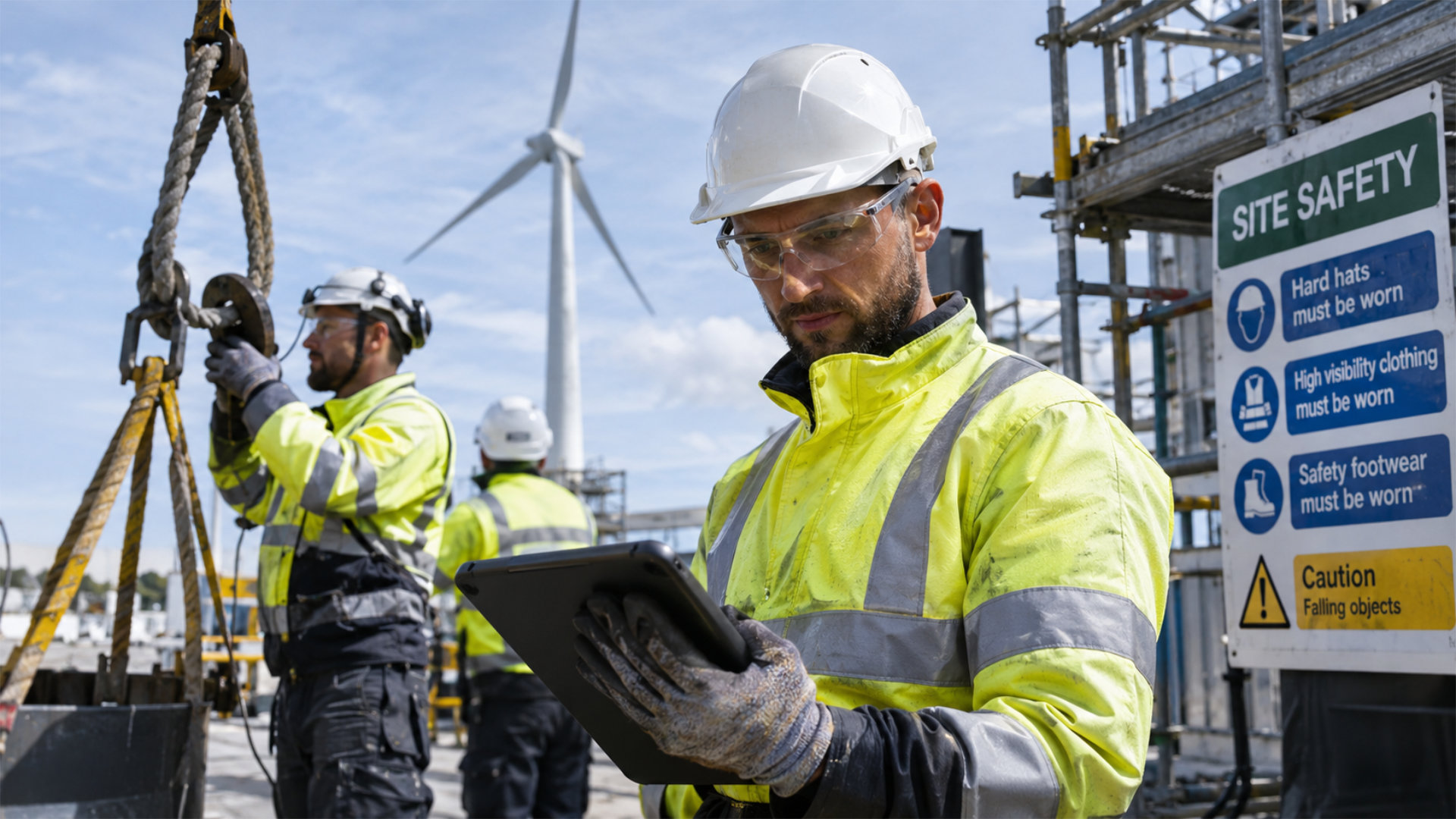
The course gives you the knowledge and habits to work safely in high-risk environments such as construction sites, wind and solar parks, industrial plants and installations. You’ll learn to spot hazards before they turn into incidents, make the right decisions before, during and after a job, use protective equipment correctly, and know how to act when something goes wrong.

Each topic ends with practice questions, and you also get an online practice exam, so you’re fully prepared for the official B-VCA exam. When you pass, your diploma is registered in the Central Diploma Register (CDR), where employers and clients can check it.

Learning Objectives

By the end of the course, participants will be able to:

  • Explain the basics of health and safety law and the responsibilities of employers, supervisors and employees.
  • Recognise the difference between a hazard and a risk, and understand how accidents happen.
  • Carry out a Last Minute Risk Analysis (LMRA) before starting a task and know when to stop work.
  • Work correctly with work permits and follow site safety rules and signs.
  • Choose, use and look after the right personal protective equipment (PPE) for the job.
  • Work safely with machines, power tools, hand tools and lifting equipment.
  • Recognise the risks of high-risk work such as working at height, in confined spaces, near excavations, or during welding and demolition.
  • Handle hazardous substances safely, read hazard labels and understand how exposure happens.
  • Recognise electrical, fire and explosion hazards and take the right preventive measures.
  • Respond correctly to accidents, incidents and emergencies, including alarms and evacuation.
  • Pass the official B-VCA exam.

Target audience

  • Technicians, installers, fitters and general operatives
  • Wind turbine and solar park installation, maintenance and service crews
  • Electricians and mechanics working on industrial or energy sites
  • Subcontractors, self-employed workers and agency staff going to a VCA-certified site
  • New employees with no previous safety training
  • Anyone whose employer or client requires a valid VCA diploma

No prior knowledge is required.
Module 1: Rules, roles and preparing the work

0
0
0
0
0

Module 2: Safe behaviour

0

Module 3: Prevention

0
0
0

Module 4: The workplace

0
0
0
0

Module 5: Personal protective equipment (PPE)

0
0
0
0
0
0

Module 6: Work equipment

0
0
0
0

Module 7: High-risk working conditions

0
0
0
0
0

Module 8: Hazardous substances

0
0
0
0
0
0

Module 9: Electricity

0
0
0

Module 10: Fire and explosion

0
0
0
0

Module 11: Incidents and emergencies

0
0

Access Course

Course Progress

0%

Course Info

Instructor
Renewables LT
Date
November 10, 2026
Difficulties
Beginner

Course Includes

  • 2 Weeks of Access
  • Access on mobile and TV
  • Quizes & Exam
  • Certificate of Completion
  • on-demand video

Course Outline

  • Module 1: Rules, roles and preparing the work
    • Lesson 1.1: Health and safety law: purpose and basic principles
    • Lesson 1.2: Prevention advisers, occupational health services and company doctors
    • Lesson 1.3: Working hours rules, environmental rules and CE marking
    • Lesson 1.4: Tasks, responsibilities and authority on site
    • Lesson 1.5: Work permits: types, when they’re needed and how to use them
  • Module 2: Safe behaviour
    • Lesson 2.1: Safe working and behaviour: attitude, awareness and speaking up
  • Module 3: Prevention
    • Lesson 3.1: Hazards and risks
    • Lesson 3.2: How accidents happen and how to prevent them
    • Lesson 3.3: Task Risk Analysis (TRA) and Last Minute Risk Analysis (LMRA)
  • Module 4: The workplace
    • Lesson 4.1: Risks in the work environment (noise, vibration, climate, lighting)
    • Lesson 4.2: Physical strain: lifting, carrying and posture
    • Lesson 4.3: Securing the workplace and installations
    • Lesson 4.4: Safety and health signs
  • Module 5: Personal protective equipment (PPE)
    • Lesson 5.1: PPE basics: when and why
    • Lesson 5.2: Head, hand and foot protection
    • Lesson 5.3: Eye protection
    • Lesson 5.4: Hearing protection
    • Lesson 5.5: Fall protection
    • Lesson 5.6: Respiratory protection
  • Module 6: Work equipment
    • Lesson 6.1: Fixed (permanently installed) machines
    • Lesson 6.2: Power tools and hand tools
    • Lesson 6.3: Lifting equipment, lifting accessories and manual hoists
    • Lesson 6.4: Forklifts and pallet trucks
  • Module 7: High-risk working conditions
    • Lesson 7.1: Welding, cutting and burning
    • Lesson 7.2: Demolition work
    • Lesson 7.3: Excavation work
    • Lesson 7.4: Working at height: ladders, scaffolds and aerial work platforms
    • Lesson 7.5: Confined spaces
  • Module 8: Hazardous substances
    • Lesson 8.1: Risks and safety measures for hazardous substances
    • Lesson 8.2: Exposure and how substances enter the body
    • Lesson 8.3: Exposure limits and recognising unusual smells
    • Lesson 8.4: Common hazardous substances on site
    • Lesson 8.5: Biological agents
    • Lesson 8.6: Industrial gas cylinders
  • Module 9: Electricity
    • Lesson 9.1: Electrical hazards and risks
    • Lesson 9.2: Working safely with electricity
    • Lesson 9.3: Special electrical hazards
  • Module 10: Fire and explosion
    • Lesson 10.1: How fire and explosions start
    • Lesson 10.2: Work environments with fire and explosion hazards
    • Lesson 10.3: Fire classes and extinguishing methods
    • Lesson 10.4: What to do in case of fire
  • Module 11: Incidents and emergencies
    • Lesson 11.1: What to do after an accident or incident
    • Lesson 11.2: Emergencies, alarms and evacuation

Social Share

Your Offshore Advantage

Built for Serious Offshore Professionals

Credibility

Competence

Progression

Recognition

Established in 2014, Renewables LT provides structured online training for offshore wind and maritime professionals, aligned with real industry standards and operational requirements.
Awards:

Quick Link

Contacts

Newsletter

Stay informed about offshore training updates, certification news, and industry developments.

Newsletter

Stay informed about offshore training updates, certification news, and industry developments.
Solution:
UpBeat.lt

Login or Sign Up to request access

Login

Search Post

Established in 2014, Renewables LT provides structured online training for offshore wind and maritime professionals, aligned with real industry standards and operational requirements.

Newsletter

Social