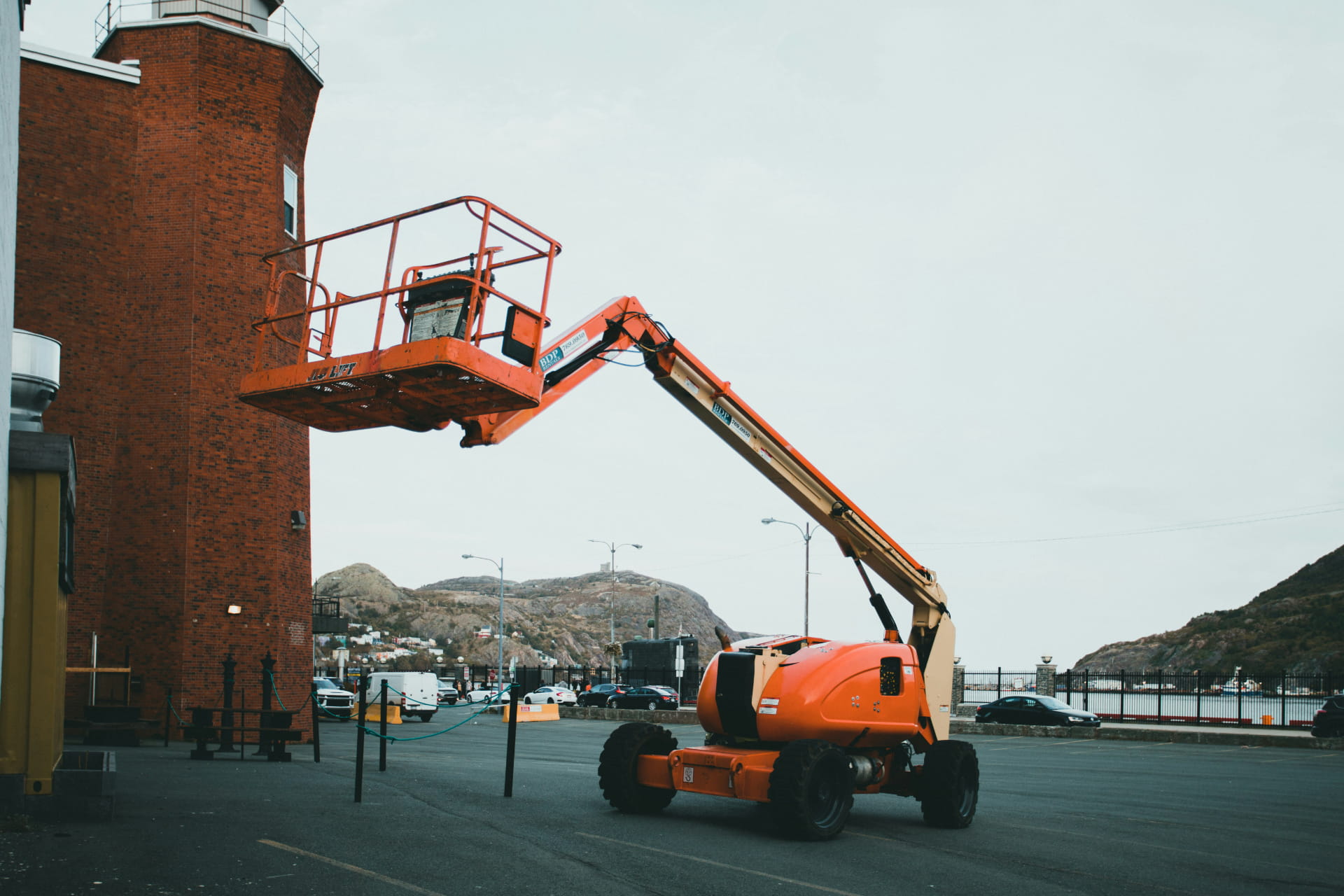
Rotating telescopic handlers, also known as roto telehandlers, are advanced lifting machines used for handling, positioning, and placing loads in complex construction and industrial environments. Unlike standard telehandlers, these machines offer 360-degree rotation, allowing greater flexibility and efficiency in confined or demanding workspaces.
This course provides the essential theoretical knowledge required for safe and competent operation of rotating telehandlers. Participants will learn how the machine works, including its main components, hydraulic systems, stability principles, and load handling capabilities. Special attention is given to understanding load charts, stability limits, and how incorrect lifting practices can lead to tip-over or dropped loads.
The training also covers key safety aspects such as pre-use inspections, hazard identification, ground assessment, and safe lifting procedures. Participants will be introduced to different attachments and how they affect machine performance and lifting capacity.
In addition, the course explains operator responsibilities, legal requirements, and industry standards, including relevant EU regulations. Emphasis is placed on decision-making, planning, and maintaining control during lifting operations in real working conditions.
The objective is not only to understand how to operate a rotating telehandler, but to do so safely, responsibly, and with full awareness of the risks involved.
This includes operators, riggers, lifting supervisors, construction workers, and other personnel involved in lifting operations where rotating telehandlers are used.